Explore Vacuum Lifters: Complete Guide, Basics, and Essential Knowledge
Vacuum lifters are mechanical lifting devices that use vacuum suction technology to safely grip and move materials such as glass panels, metal sheets, stone slabs, and industrial components. Instead of hooks or clamps, these systems rely on suction pads connected to a vacuum pump that creates negative pressure, allowing materials to be lifted securely.
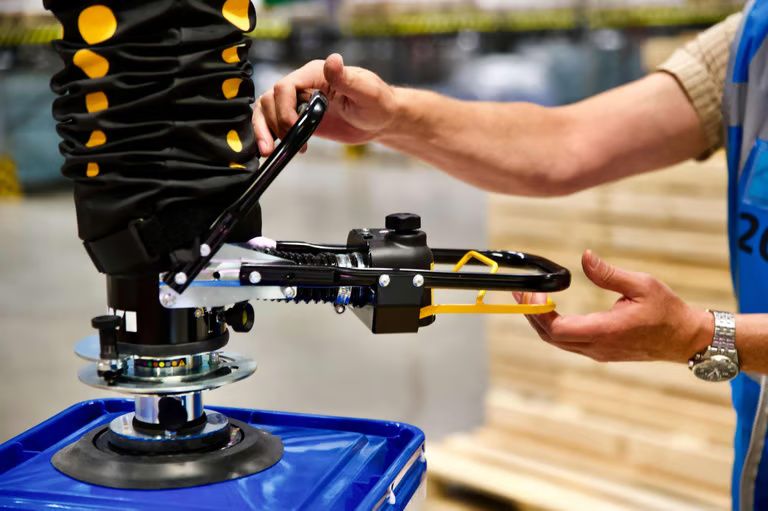
These devices were developed to address challenges in industrial material handling where traditional lifting tools could damage surfaces or pose safety risks. For fragile or smooth materials like architectural glass, polished stone, and coated metal panels, vacuum suction provides stable, evenly distributed lifting force.
Vacuum lifting systems are commonly used in:
-
Construction and glazing operations
-
Manufacturing plants
-
Warehousing and logistics facilities
-
Automotive and aerospace assembly lines
-
Heavy equipment fabrication
They can be manual, battery-powered, or fully integrated into automated lifting systems within production lines.
Vacuum lifters typically include:
-
Suction pads
-
Vacuum pump or generator
-
Control system and gauges
-
Safety valves and warning indicators
-
Structural lifting frame
The table below summarizes common types of vacuum lifting equipment and their typical applications.
| Type of Vacuum Lifter | Common Use Case | Power Source |
|---|---|---|
| Manual Pump Lifters | Small glass or panel handling | Hand-operated pump |
| Electric Vacuum Lifters | Industrial sheet handling | Electric motor |
| Battery-Powered Lifters | Construction site mobility | Rechargeable battery |
| Automated Vacuum Systems | Production line integration | Centralized power unit |
Why Vacuum Lifters Matter in Modern Industry
Workplace safety compliance and efficiency are major priorities in industrial environments. Vacuum lifters reduce manual strain and help prevent injuries caused by lifting heavy or awkward materials.
Heavy material handling equipment traditionally relied on chains, clamps, or slings. While effective for certain loads, these tools may cause surface damage or uneven pressure distribution. Vacuum suction lifting technology offers controlled and stable lifting, especially for flat, smooth materials.
Industries affected include:
-
Commercial construction and infrastructure projects
-
Renewable energy installations (solar panels, large glass modules)
-
Manufacturing sectors handling sheet materials
-
Warehousing facilities managing bulky goods
Vacuum lifters solve several problems:
-
Reduce risk of material breakage
-
Minimize worker strain injuries
-
Improve precision during placement
-
Increase operational efficiency
-
Support automation in production lines
The growing adoption of automated lifting systems also supports digital transformation initiatives in manufacturing. Integration with programmable logic controllers (PLCs) and smart sensors allows monitoring of suction pressure and load stability.
Below is a simplified comparison between manual handling and vacuum lifting systems.
| Factor | Manual Handling | Vacuum Lifting System |
|---|---|---|
| Worker strain | High | Low |
| Surface protection | Limited | High |
| Precision placement | Moderate | High |
| Automation compatibility | Low | High |
| Safety monitoring | Minimal | Built-in sensors |
As industries focus on workplace risk reduction and compliance standards, vacuum lifters play a significant role in improving operational safety and reliability.
Recent Developments and Industry Trends
In recent months, manufacturers have emphasized energy-efficient vacuum pump technology and smart monitoring systems. Digital pressure sensors with real-time alerts are increasingly integrated into industrial vacuum lifter systems.
Battery technology improvements have also enhanced portable vacuum lifting equipment. Newer lithium-based systems provide extended operation time and improved charging efficiency, supporting outdoor construction activities.
Automation continues to expand in advanced manufacturing facilities. Vacuum lifting modules are being connected to robotic arms for precision placement in glass fabrication and metal sheet assembly.
Another noticeable trend is sustainability. Equipment manufacturers are designing systems that reduce air leakage and optimize energy consumption, aligning with broader environmental compliance frameworks.
There has also been increased attention to ergonomic standards. Enhanced control interfaces and lightweight frame materials are helping reduce operator fatigue during extended use.
Regulatory and Compliance Considerations
Vacuum lifters are subject to occupational safety and equipment compliance standards. Regulations typically address load capacity ratings, safety factors, inspection requirements, and maintenance documentation.
Common regulatory areas affecting vacuum lifting systems include:
-
Workplace safety standards governing lifting operations
-
Equipment certification requirements
-
Periodic inspection and maintenance guidelines
-
Operator training requirements
-
Electrical safety compliance
Industrial lifting equipment often requires clear labeling of maximum load capacity and operational instructions. Many safety frameworks require redundancy systems, such as backup vacuum circuits or warning alarms, to prevent accidental load release.
Regular inspection schedules are typically mandated to ensure:
-
Suction pad integrity
-
Vacuum pump performance
-
Structural frame condition
-
Safety valve functionality
Organizations implementing vacuum lifting technology must maintain proper documentation and risk assessment procedures as part of their compliance programs.
Tools and Resources for Vacuum Lifting Systems
Professionals working with industrial vacuum lifter systems often rely on various tools and digital resources to improve safety and efficiency.
Helpful resources include:
-
Load capacity calculators for determining safe lifting limits
-
Risk assessment templates for material handling operations
-
Preventive maintenance checklists
-
Industrial safety training platforms
-
Equipment inspection reporting software
Commonly used technical tools:
-
Digital vacuum pressure gauges
-
Load monitoring sensors
-
Calibration instruments
-
Maintenance scheduling software
-
Safety compliance documentation templates
Some manufacturers also provide simulation tools to model lifting scenarios and ensure stable suction pad placement before actual operation.
For facility managers, maintenance management systems help track inspection intervals and ensure regulatory adherence.
Frequently Asked Questions
What materials can vacuum lifters handle?
Vacuum lifters are typically used for smooth, non-porous materials such as glass panels, sheet metal, polished stone, composite boards, and certain plastics. Surface condition and material weight must align with equipment specifications.
Are vacuum lifters safe for heavy loads?
When operated within rated load capacity and maintained according to safety standards, vacuum lifting systems are designed to provide stable and secure lifting. Built-in monitoring systems often alert operators if suction pressure drops.
How do vacuum lifters prevent accidents?
Safety features may include pressure sensors, warning alarms, backup vacuum circuits, and automatic shutoff mechanisms. These systems help reduce the risk of accidental load release.
Do vacuum lifters require regular maintenance?
Yes. Routine inspection of suction pads, pumps, hoses, and safety valves is essential. Maintenance schedules help ensure optimal performance and compliance with workplace safety regulations.
Can vacuum lifters be integrated with automated systems?
Many modern systems are compatible with robotic arms and automated production lines. Integration enhances precision, repeatability, and overall efficiency in advanced manufacturing environments.
Conclusion
Vacuum lifters are a vital component of modern material handling solutions. By using controlled suction pressure instead of mechanical gripping methods, these systems provide safe, efficient, and surface-friendly lifting of heavy materials.
Their role in improving workplace safety compliance, reducing manual strain, and supporting automated lifting systems makes them increasingly relevant in construction, manufacturing, and logistics industries.
With advancements in energy efficiency, digital monitoring, and ergonomic design, vacuum suction lifting technology continues to evolve alongside industrial automation trends.
Organizations that understand equipment standards, regulatory considerations, and proper maintenance practices are better positioned to use vacuum lifters effectively within safe and compliant operational frameworks.